
We’ll help you pick an easy-to-dock marina, a reputable charter company, and the ideal boat for your needs and preferences.
Book any boat in Croatia
Advised by an independent local skipper
Benefits of booking with our agency
Price match
Lowest price guaranteed
Found the same boat cheaper elsewhere? We match that price, and Skipper Hotline Assistance stays included.

Skipper Hotline Assistance
Included at no extra cost
Route planning, storm warnings and a local skipper on call, before and during your trip.
As your booking agency, we receive a standard commission from the charter company, which allows us to include Skipper Hotline Assistance with every booking at no extra cost.
Browse boats on your own
Loading the boat search…
Q&A: Booking a boat in Croatia
How do I book a boat in Croatia through Skipper Hotline?
Send us your dates, crew size, sailing region and boat type, through the form on this page, on WhatsApp (+385 91 591 1123) or by e-mail ([email protected]). A local skipper, a real person, sends you a shortlist of boats with an honest comment on each one.
When you choose a boat, we ask the charter company to hold it while your crew decides. Then you get the booking confirmation and the invoice, and Skipper Hotline Assistance starts with route planning. Asking for a shortlist doesn’t oblige you to book.
What do I get when I book a boat through Skipper Hotline?
- Booking advice from a local skipper: a well-maintained boat, a reputable charter company and an easy-to-dock base marina.
- Skipper Hotline Assistance for the whole charter: a personalized route plan, the 101 Sailing Croatia booklet, storm and wind warnings, route updates, and live chat support on WhatsApp, 8–22h daily.
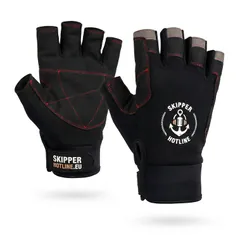
- Sailing gloves: a high-quality pair as a welcome gift.
- Price match: if you find the same boat cheaper at another agency, we match the price.
You pay the charter company’s own price for the boat. The charter company pays our commission, and the commission pays for the assistance.
Is Skipper Hotline a charter company?
No. Skipper Hotline is an independent boat booking agency in Croatia, run by local professional skippers. We don’t own boats. We book boats from many charter companies along the whole Croatian coast.
Because we have no fleet of our own to sell, we can tell you honestly which boat, charter company and base marina we would choose, and which ones we would avoid. The founder, Filip Đurić, has worked as a professional skipper and sailing instructor since 2012.
Which boats and charter bases can I book through Skipper Hotline?
Sailboats, catamarans and motorboats, with or without a skipper: over 3,500 charter boats in all main charter regions of Croatia. The main charter bases include:
- Istria: Pula, Pomer
- Kvarner: Punat on the island of Krk
- Zadar region: Sukošan, Biograd
- Šibenik region: Šibenik, Murter
- Split region: Trogir, Kaštela, Split
- Dubrovnik: ACI Marina Dubrovnik in Komolac
Tell us about your crew and plans, and we suggest the base and the boat that fit them.
Can you hold a boat while my crew decides?
Yes. We ask the charter company for an option: the boat is held for you for a short time, usually one to a few days, depending on the company and the dates. An option doesn’t oblige you to book.
If your crew says yes, you confirm and pay the first installment, and the boat is booked. If not, the option ends, and other sailors can book the boat. In July and August good boats go fast, so decide within the option time.
Can I book a boat with a skipper or an instructor?
Yes. When you book a boat through us, we can arrange a vetted local skipper for the whole charter, and we don’t add anything to the skipper’s price. A skipper costs about €200 to €250 per day plus food, and needs a cabin on board.
If you want to be the skipper but don’t feel ready, book an instructor for the whole week, or take a skipper or docking training before the trip. We don’t offer an instructor for only the first days of a charter, because in high season it can’t be organized.
If nobody in your crew has a recognized license, you need a hired skipper.
Choosing the boat
What do you check before you recommend a boat?
Much more than the price:
- Age and condition: we usually suggest boats 1 to 7 years old, because older charter boats are often worn out.
- Charter company: how it maintains its boats, and how fast it helps when something breaks.
- Equipment: bow thruster, mainsail type, water tank size, number of toilets, dinghy and outboard engine.
- Base marina: enough space to leave and return, shelter from the wind, and how you get there.
- The crew: number of cabins, sailing experience, and what you want from the week.
Then we tell you which boat we would choose ourselves, and why.
What is the best charter boat for a first-time skipper in Croatia?
The boat you can handle in a crosswind in a full marina. For most first-time skippers, that is a monohull of 36 to 40 ft with a bow thruster and a furling mainsail, not older than about 7 years.
Don’t book a bigger boat than the crew needs. A longer, wider boat is harder to dock and costs more in marinas.
A catamaran turns easily in tight spaces. If you choose one for a first charter, the most important thing is a clear view of the stern from the helm, so you can see the dock as you reverse in. That is why we don’t recommend flybridge catamarans to beginners.
Docking a catamaran also needs its own training. You steer mainly with the two engines, and both the logic and the technique are completely different from a monohull. So before the trip, the skipper should take a catamaran docking training, even after years of sailing monohulls.
Tell us about the crew’s experience, and we choose boats you will feel safe on.
Is a newer charter boat worth the higher price?
Often, yes. Charter boats work hard: they sail many weeks every season, each week with a new crew. After about 7 years, many have worn sails, older engines and more small breakdowns.
In July and August, a boat 1 to 4 years old often costs at least €1,000 more per week than a 7 to 12-year-old boat of the same size. For that you usually get better sails and engine, newer electronics and fewer problems. But age is not everything: a well-kept older boat from a good charter company can be a better choice than a new boat from a poor one. We tell you which is which.
How big should the water tank be on a charter boat in Croatia?
For 6 people, look for at least 450 liters. A crew of six can easily use more than 100 liters a day, and in summer some islands limit water refills or charge a lot for them.
A bigger tank, or a watermaker on bigger boats, means fewer refill stops. We check the tank size of every boat we recommend, and we plan the refill stops into the route.
Which charter base is easiest to reach by plane or by car?
By plane, choose a base close to the airport. Times are by taxi, without traffic:
- Split airport: Trogir is 6 km away (about 15 minutes), Kaštela about 25 minutes.
- Dubrovnik airport: ACI Marina Dubrovnik in Komolac is 25 km away (about 30 minutes).
- Zadar airport: Sukošan is about 20 to 30 minutes away. Zadar airport is small.
- Pula airport: Pomer is 10 km away.
- Rijeka airport, on the island of Krk: Punat is 30 km away (20 to 30 minutes).
By car from Central Europe, Istria and Kvarner are the closest regions, and Zadar and Šibenik are a few hours further on the motorway. On summer Saturdays, plan extra time for traffic.
Can you book a boat I found on another website?
Yes, if it is a charter boat in Croatia. Send us the link, or the boat name, base and dates. We check the boat, the charter company and the base marina, and tell you honestly what we think.
If you book it through us, Skipper Hotline Assistance is included. If another agency offers the same boat and week for less, we match that price.
Charter dates and terms
How does a charter week work in Croatia?
Most charters run from Saturday to Saturday. Check-in is usually from 17:00 or 18:00 on Saturday. The base staff go through the boat, the equipment and the inventory with you. Check the sails, engine, dinghy and safety gear, and photograph any damage before you sign.
The boat must be back in the base on Friday, usually by 17:00 or 18:00. A diver checks the hull, keel, rudder and propeller, and you spend the last night in the marina. On Saturday you leave the boat by 08:00 or 09:00. A late return costs extra.
So a charter week gives you about six days of sailing, and the route plan is made for those six days.
Can I charter a boat for less than a week, or start on another day?
Sometimes. In July and August most charter companies rent boats only for full weeks, from Saturday to Saturday. Some companies also offer other start days, such as Wednesday.
Shorter charters of 3 or 4 days are easier to find in April, May and October. In summer they happen only when a boat has a gap between two bookings. Send us your dates, and we look for boats that fit them.
Can I do a one-way charter in Croatia?
Sometimes. Some charter companies let you start in one base and finish in another, for example from Split to Dubrovnik. This costs a one-way fee, often about €500 to €750, and you may have to leave the boat earlier, on Friday. Availability is limited, so ask early.
For most crews a round trip is simpler and cheaper. Split to Dubrovnik is about three hours by car.
What is included in the charter price, and what do I pay on top?
The price covers the boat, its standard equipment and the basic insurance. On top you usually pay:
- Transit log, about €180 to €350: final cleaning, bed linen and cooking gas, depending on the company.
- Tourist tax, about €1.30 to €2 per person per night, paid at check-in.
- Fuel: the boat comes with a full tank and goes back full. A sailing week usually uses €150 to €250.
- Marinas, about €100 to €150 per night for a 40 ft boat in season, or buoys, about €50 to €80.
- Extras you choose, such as an outboard engine, paddle boards, a skipper or deposit insurance.
Ask for the full list of extras before you book, so the prices you compare are real.
How does the security deposit work, and is deposit insurance worth it?
At check-in you leave a security deposit, usually on a credit card: for example about €2,000 for a 40 ft sailboat, or €3,000 to €3,500 for a catamaran. If the boat comes back without damage, the full deposit is released.
Small damage, such as a lost fender, is paid from the deposit. For bigger damage you pay no more than the deposit, and the boat’s insurance covers the rest, unless the damage comes from gross negligence.
Deposit insurance (damage waiver) is a fee you don’t get back, often about 10% of the deposit. It lowers the deposit to a small amount, or removes it. It makes most sense when the deposit is high and you are new to the boat or the area.
When do I pay for a charter, and what if I have to cancel?
Usually 30 to 50% when you book, and the rest 4 to 6 weeks before the charter. Extras are often paid with the second payment.
If you cancel more than about a month before the charter, you usually lose about half of the price. In the last month, you usually pay the full price. Each charter company has its own terms, so read them before you pay, and consider travel cancellation insurance.
Licenses and documents
What license do I need to charter a boat in Croatia?
The skipper needs a boating license that Croatia recognizes. Croatian boat licenses (voditelj brodice) are valid, and the Croatian Ministry of the Sea, Transport and Infrastructure publishes the list of recognized foreign licenses. It includes the ICC, if it is valid for coastal waters, and many national licenses, for example from the RYA, the ASA and the German SBF See. Many are valid for boats up to 18 m, which covers most charter boats.
Many licenses on the list count only together with a radio certificate (see the next question). Send us a photo of the license before you book, and we check it for you.
Do we need a VHF radio certificate?
Yes, in most cases. Croatia recognizes many foreign licenses only together with a certificate for operating a radio station, such as the SRC (Short Range Certificate), and charter companies ask for it at check-in. Practically every charter boat has a VHF radio.
Some licenses already include radio. If the license doesn’t mention VHF or radio, bring a separate certificate, or send it to us and we check it.
What documents do we need for the charter?
A few days before the trip, you send the crew list: names, dates of birth and passport or ID numbers of everyone on board. The boat can’t leave without it.
At check-in, bring:
- the skipper’s boating license and the VHF radio certificate, as originals
- passports or ID cards for everyone on board
- a credit card for the security deposit
Many charter companies don’t accept photos or copies of the license.
After booking
What happens after I book the boat?
Skipper Hotline Assistance starts. You answer 8 short questions about your crew and wishes, and we design a route around them. You also get the 101 Sailing Croatia booklet.
Three days before you sail, you get the forecast for each sailing day, and we adjust the route to it. During the charter, a local skipper follows your trip on WhatsApp, 8–22h daily, and warns you about storms and wind changes.
What happens if something breaks on the boat during the charter?
Call the charter company’s base. The boat and its repairs are the charter company’s job, so save the base’s phone number at check-in. A good company sends a technician or tells you where to meet one.
That is one reason we recommend charter companies by how they maintain and service their boats, not only by price. In an emergency at sea, always call 195 or 112, or use VHF channel 16 first.
Is the water in the boat’s tank safe to drink?
No. Use it for showers and washing dishes. For drinking, buy bottled water, or bring canisters and fill them with tap water in marinas: tap water in Croatia is safe to drink. Plan at least 2 liters per person per day.
Contact us
- General info
- [email protected]
- Booking
- [email protected]
- Phone / WhatsApp
- +385 (0) 91 591 1123